
The Traveling Pasty
From Cornwall to Michigan's Upper Peninsula


The Cornish Pasty and the Mining Community
In the shadowy depths of 19th-century Cornish tin mines, where dust and danger were ever present, a humble pastry became both lifeline and legacy. With its crimped, golden crust and hearty filling of beef, potato, onion, and swede (a.k.a. rutabaga), the Cornish pasty offered miners a self-contained meal designed for the harsh realities of underground labor. No utensils required—just a sturdy crust that doubled as a handle for grime-coated hands. Miners would grip, eat, and discard the held portion to avoid contamination. Ingenious in its simplicity, the pasty became a symbol of working-class Cornwall by the early 1800s.
Mining in Cornwall—and the pasty-carrying laborers who powered it—thrived for decades. But by the 1840s and 1850s, the industry faced a steep decline. Fluctuating tin and copper prices, coupled with diminishing ore quality, led to widespread mine closures and job losses. Communities built around the mines were forced to reckon with a difficult choice: endure economic hardship at home or seek opportunity abroad.
Many chose to emigrate, carrying their mining expertise and culinary traditions with them. From the silver mines of Mexico to the goldfields of Australia, the copper belts of South America to the boomtowns of the American West, Cornish miners—known as "Cousin Jacks"—left their mark. And wherever they went, the pasty followed, evolving in local kitchens while preserving its roots in Cornish resilience.
The Pasty Finds a New Home in Michigan
As Cornish miners emigrated across the world, many found work in the booming copper and iron mines of Michigan’s Upper Peninsula. Towns like Calumet, Ishpeming, and Iron Mountain became hubs for mining labor—and with the miners came their traditions, including the pasty.
In the U.P., the pasty was embraced not only by Cornish immigrants but also by Finnish, Italian, and other European communities who adapted the recipe to suit local tastes and ingredients. Vegetables were diced larger, carrots made an appearance, ground beef was used, and folks began to argue about whether to dip their pasty in ketchup or gravy–all taboo in official Cornish Pasties. However, the structure remained the same–a golden crust with a crimped edge, stuffed with edible comfort. Over time, the pasty evolved from a Cornish mining export into a uniquely Yooper delicacy consumed by all, offering fillings and flavors as diverse as the folks who immigrated to Michigan’s Upper Peninsula.
The Pasties of Today
Cornish and Yooper pasties are thriving today, with locals and tourists praising their authenticity, variety, and deep cultural roots. In Cornwall, bakeries uphold tradition while offering creative twists featuring local cheeses, seafood, sausages, and other Cornish ingredients; in Michigan’s U.P., family-run shops serve hearty classics inspired by pasties of old alongside modern adaptations influenced by international flavors.
While pasties have moved on from being the official meal of miners, they now reign large in the world of tourism. Both Cornwall and Michigan’s U.P. boast beautiful coastlines with ample opportunity to enjoy hiking, boating, swimming, and spending time in the great outdoors, making them ideal vacation destinations. And the pasty, whether enjoyed on a windswept cliff in Cornwall or beside a quiet lake in the U.P., is the perfect, flavorful companion to outdoor adventure. Visitors can grab one from a local bakery and head straight to the beach, trail, or harbor–no utensils required, just a warm taste of history wrapped in a golden crust.
See and Taste the Difference For Yourself
While there are many places to get a pasty, if you travel to Cornwall or Michigan’s U.P., we recommend giving these bakeries a try for a great example of the regional differences between these historically linked pastries.
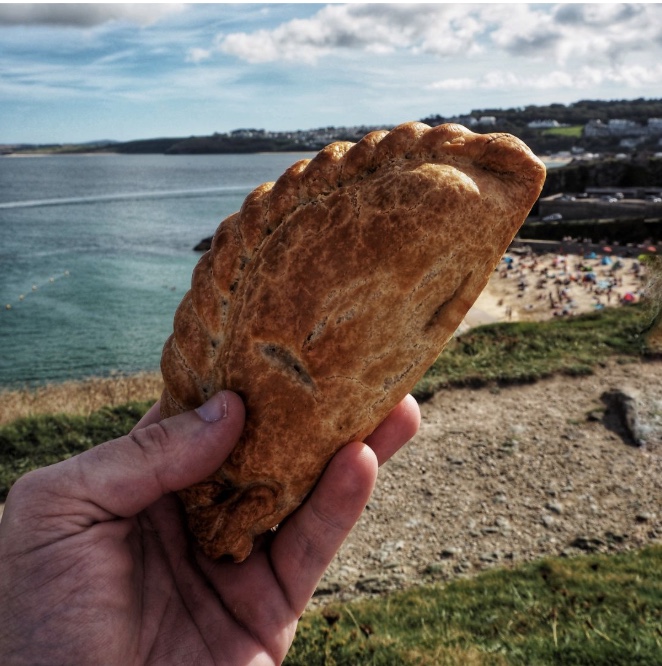
Philps - Famous Pasties from Cornwall I photo credit: Canva
Philps’ Classic Cornish Pasty—shaped in the standard semi-circle, the rounded edge crimped, filled with finely chopped beef, potato, onion, and rutabaga and topped with Philps’ signature Pastry P—is an excellent example of today’s Cornish pasty.
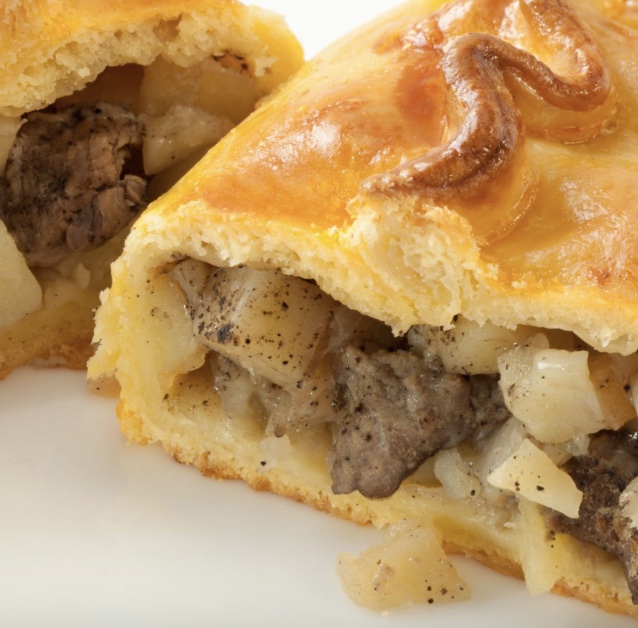
Roy’s Pasties - U.P. Michigan I credit: Canva
Roy’s Traditional Pasty—shaped into a circle with 360 degrees of crimped edges, filled with diced beef, pork, potato, onion, rutabaga, and carrot—demonstrates the Yooper twist on a pasty while not straying too far from tradition.
Pasties Meet Cider Country
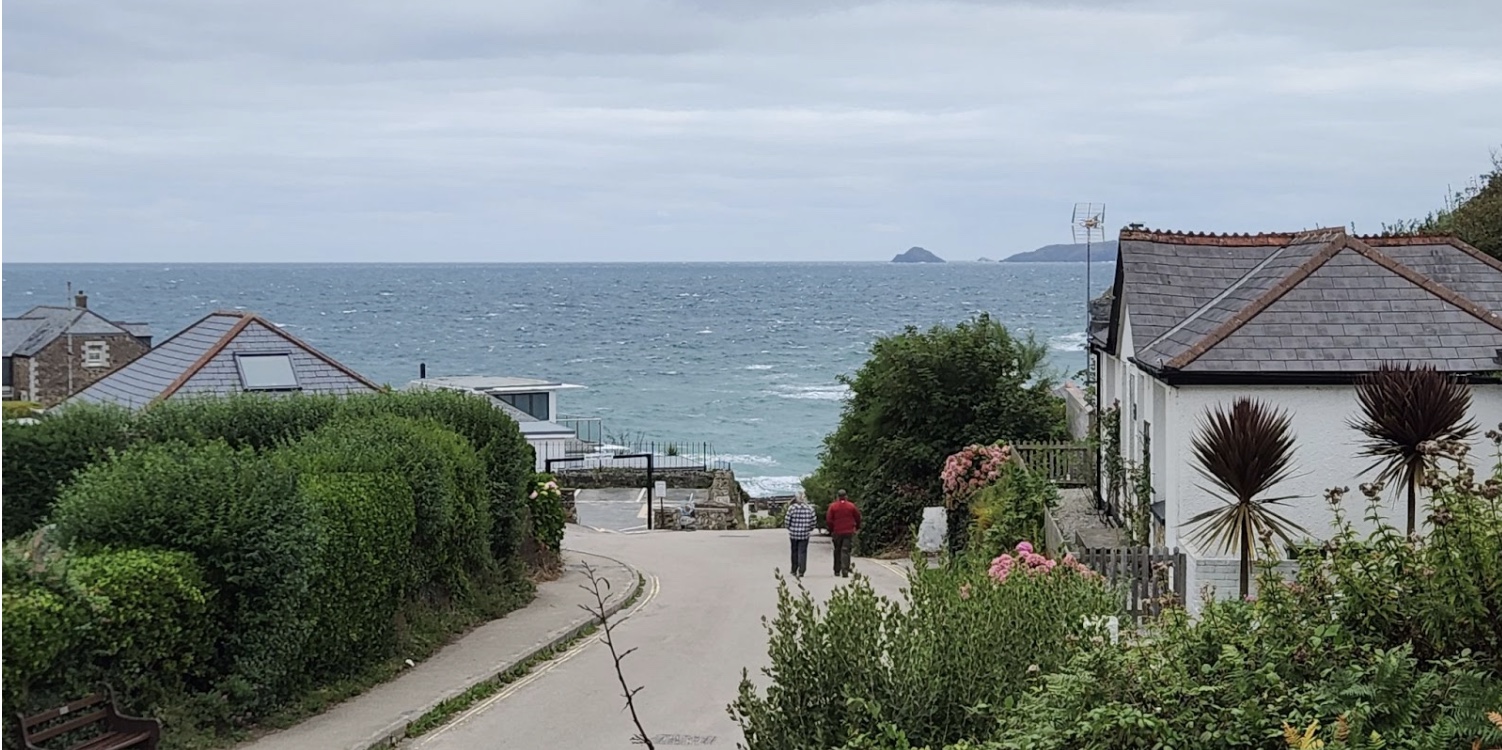
Trevaunance Cove, St. Agnes, Cornwall - view from The Driftwood Spars
Our hotel for four nights on the Cider Country Swing Tour
photo credit: Ciaran Leask
Together, a pasty and a cider form a beautiful duet—one baked, one fermented, both steeped in Cornish tradition.
Pasties have earned their spot in the history of the Cornish people along with another working-class tradition—cider. With its crisp bite and golden hue, cider has long shared the Cornish table with the humble pasty. Pressed from apples grown in the region’s many orchards, it was once the daily drink of farmhands and field workers—refreshing and rooted in the rhythms of rural life. Like the pasty, cider is a product of Cornwall’s working landscape, shaped by generations of skilled laborers and community tradition.
Join Radiant-Moments on tour in Cornwall and Somerset, September 2026, for our Cider Country Swing Tour and have a traditional Cornish pasty and cider for yourself. From orchard-side sips to bakeries tucked into harbor towns, we invite you to experience Cornwall’s flavors where they were born—among the cliffs, orchards, and people that make them unforgettable.
For more information about our Cider Country Swing tour, please visit our website. www.radiant-moments.com
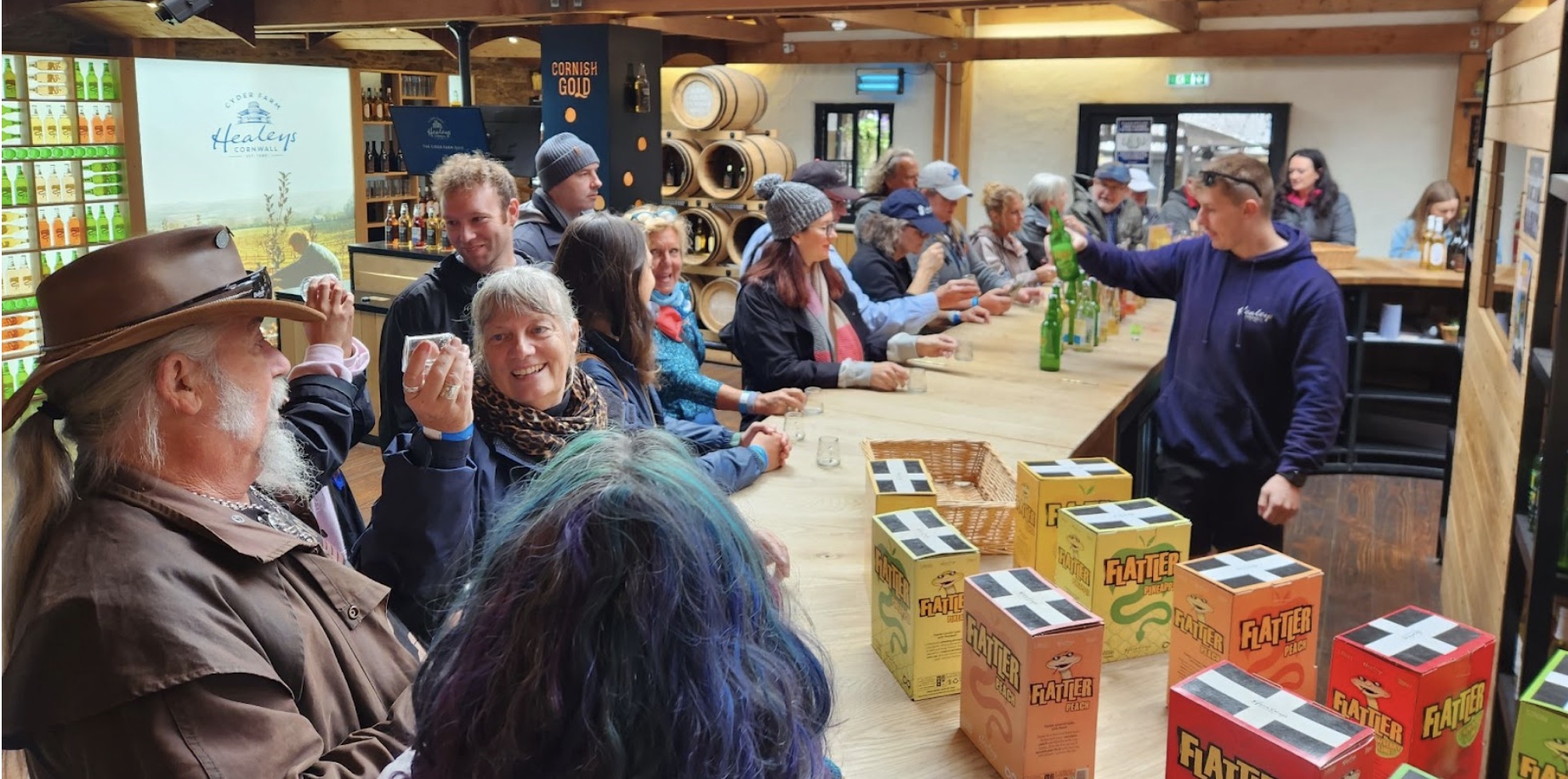
Guests participating in a cider tasting at Healeys Cyder Farm in Cornwall, 2024.
Photo credit: Ciaran Leask
Find Us Online
Website: www.radiant-moments.com
Email: info@radiant-moments.com
Socials: @radiantmomentstravel
Meet Ciaran Leask our Journey Jester & Tour Operator with Radiant-Moments Travel:

Title Hero Image: Ciaran and Micah, sporting a pasty hat from Philps Bakery in Marazion,
on the coast of Cornwall at Boscastle Harbour.
Photo credit: Ciaran Leask